Transnational Feminisms (WGS 242) emerged from Transnational Dialogues: De-centering the Academic Debate on Global Feminisms, a two-day interdisciplinary conference seeking to nurture and sustain teaching and research within the GLCA colleges. Our main objective was to organize a two-day interdisciplinary conference on transnational feminisms as a first step towards building lasting inter-institutional collaborations. The project was funded in 2007 by the GLCA Academic Innovation Fund.
The conference was held at Kenyon College, September 26-28, 2008. As catalysts for this dialogue, we were honored to count among us three outstanding keynote speakers: Kum-Kum Bhavnani, from the University of California at Santa Barbara, Santa Barraza, from the Texas A&M University, and Orit Bashkin, from the University of Chicago, who represented feminist perspectives from Iraq, US Chicana, Africa, India, and Brazil. We had a full program with three keynote speakers, 19 panels, and the participation of nearly 150 people from 23 colleges and universities (including 71 from six GLCA campuses). Our panels covered a wide range of exciting topics, which included feminisms in Latin America; U.S. Chicana theories and methods of transnational feminisms; myths and realities of feminisms in East European culture; and transnational feminist pedagogies.
Main Outcomes included the development of models for collaborative teaching and curricular development initiatives, and opportunities for publication and dissemination. Within the area of collaborative teaching, Kenyon faculty participated in a three-day teaching workshop led by two outstanding specialists in the field, Chandra Mohanty and Jacqui Alexander (Kenyon College, May 2009). As an outcome of this workshop, we created a new interdisciplinary course, WGS 242, Transnational Feminisms, which was permanently incorporated to the Kenyon curriculum and housed in the Women’s and Gender Studies Program. The teaching of this course has rotated among Kenyon faculty members who attended the workshop. This workshop was made possible by a Teachers Teaching Teachers Grant funded by Kenyon College and the Mellon Foundation.
Within the areas of dissemination and publication, faculty from the GLCA and beyond have shared course syllabi, bibliographies, filmographies, and websites on the subject. We also published a collective volume on transnational feminisms (Transnational Borderlands in Women’s Global Networks: The Making of Cultural Resistance. Clara Román-Odio and Marta Sierra, eds. New York, Palgrave Macmillan, 2011), including essays from keynote speakers, conference participants, and specialists in the field.
Crossing Borders for Feminist Resistance builds upon this collective effort. Our class intended this website to be a useful resource for future faculty and students of Transnational Feminisms.
In addition to the students enrolled in the course, the invaluable contributions of Ms. Jenna Nolt and Mr. Alex Alderman were indispensable to the success of our project. Ms. Nolt, Digital Initiatives and Women and Gender Librarian at Kenyon College, contributed her expertise to enable a research resource (https://kenyon.libguides.com/wgs242) used by the students to identify and access materials critical to their projects. Mr. Alderman, Instructional Designer at Kenyon College, deployed his digital technologies expertise in the design and creation of the project website. Noteworthy as well were the contributions of Ms. Sofia Alpízar Román, Kenyon class of 2021, as project manager, and of Ms. Nour Bouhassoun, class of 2021, as chief editor of the content of the website.
U.S. Women of Color
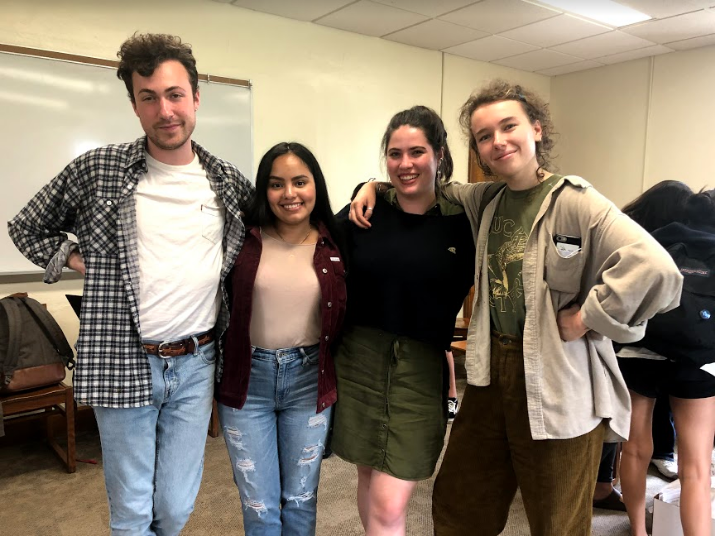
“Working on this project really challenged not only our research skills, but our critical thinking skills. It was really exciting to learn about so many empowering and creative organizations dedicated to fighting for reproductive justice for all women, including women of color, LGBTQ+ women, and low-income women in order to better healthcare and access to reproductive rights globally. This project allowed us to do hands-on research to explore the concepts discussed within Transnational Feminisms as a class. We were able to actively reflect on all we have learned within the classroom, and apply it to real-world contexts.”
–Sophia Castaldo ’20
“As opposed to individual research papers or final exams, the group project format forces the members of the group to face the reality of the topics in a different way. We have found that bringing these topics to frequent conversation and openly communicative response and rationalization, our understandings are far more comprehensive and our ability to make a difference, stronger. Being that transnational feminist methodologies are anchored in the act of collaboration, we felt a much closer tie to this topic of study than what would be achieved through solely individual work.”
-Jeb Backe ‘19
Palestine
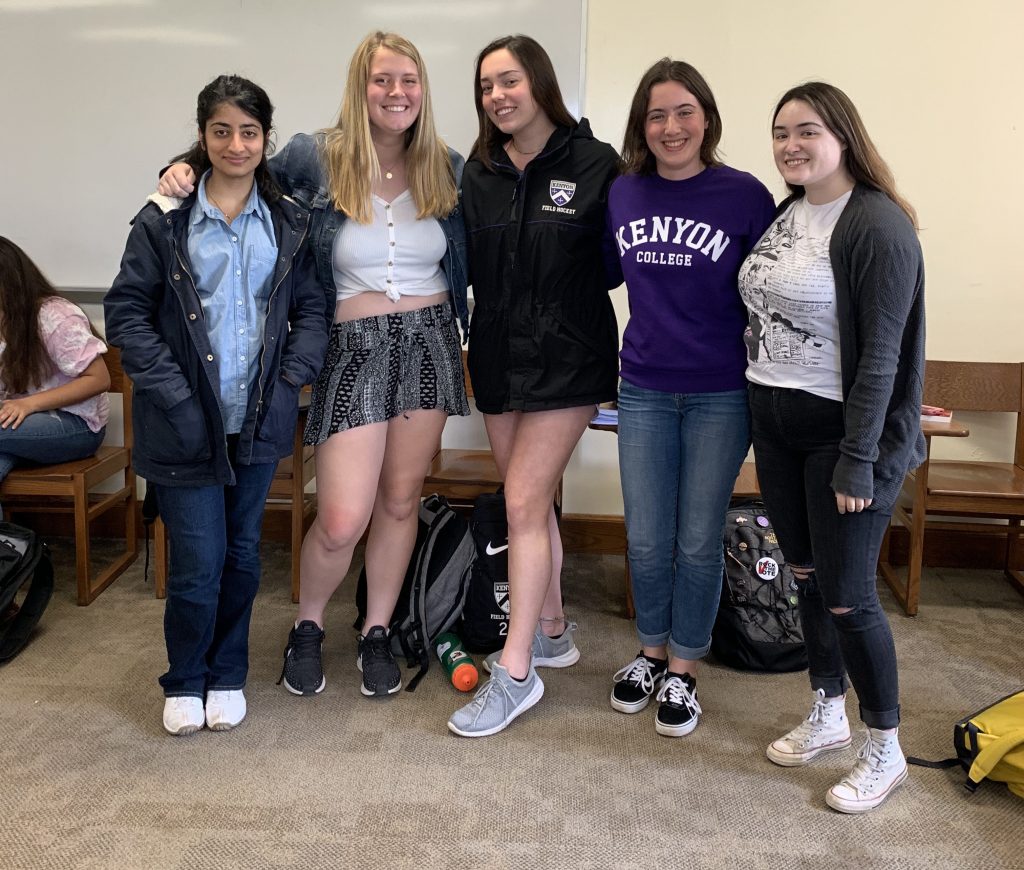
Casey Leach ‘22,
Abby Timmins ‘22, Alia Korot ‘22, Paige Hettinger ‘21
“This project has taught me that there is always more underneath the surface of what you think you know, specifically for me within the subject of Palestinian women, and violence against women in general. Working together with a group to understand the issues affecting a different country has pulled together all we’ve learned in Transnational Feminism and has shown us what it truly means to cross borders and form feminist solidarity, rather than sisterhood.”
-Casey Leach ‘22
Vietnam
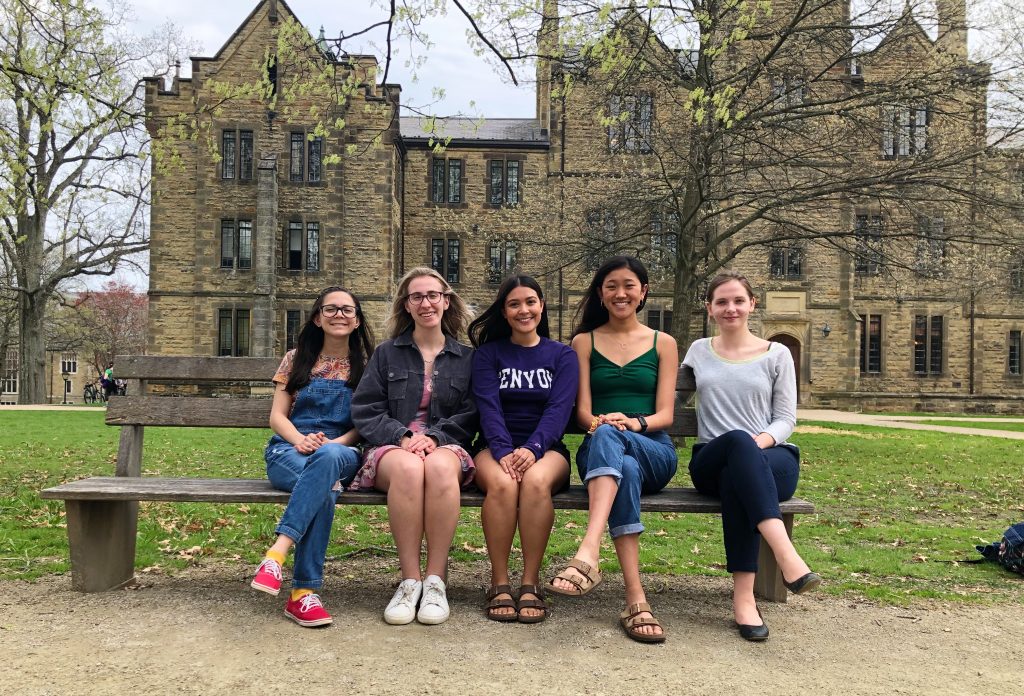
Emma Esposito ‘20,
Kassandra Ramirez ‘22, Mari Holben ‘22, Sascha (Alexandra) Wilson ‘19
“This class pushed us to critically self-reflect on what we perceived feminism to be. We had it engraved in us that the word “feminism” had one universal definition, referring to women in general. The truth of the matter is that feminism is multidimensional and place-based because of the complex interactions women have with the State, transnational forces, and colonialism. The final class project took this one step further in allowing the class to research how another country’s history (going centuries back), economy, political structure, and other factors transform the way women operate within the context of their culture and in connection with global forces. This approach is radically different from “western feminism” practices in the United States.”
-The Vietnam Group
India
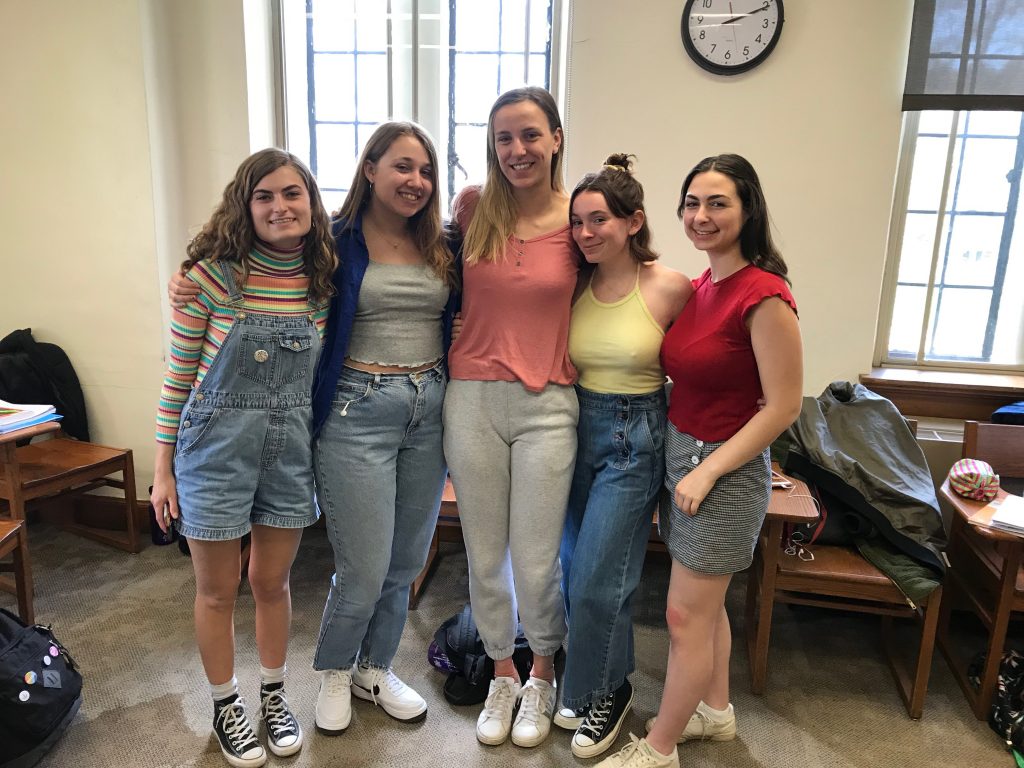
Mireille Manzelle ‘22, Lydia Krumper ‘22,
Maggie Grabowski ‘20, Lili Berstein ’22,
Ruby Schiff ‘21
“Through extensive research and collaboration, I’ve not only been able to learn about the culture and feminist activism in India, but discover how to acknowledge our own positionality and location, and thus embody the power of transnational feminism.”
-Ruby Schiff ‘21
“This project taught us to look at women of the world in a whole new light. We understand how to analyze culture and politics without projecting our own ideas of feminism on to another country. Working together as a group gave us the ability to learn from one another in order to grasp new concepts and methodologies.”
-Lydia Krumper ‘22
Mexico
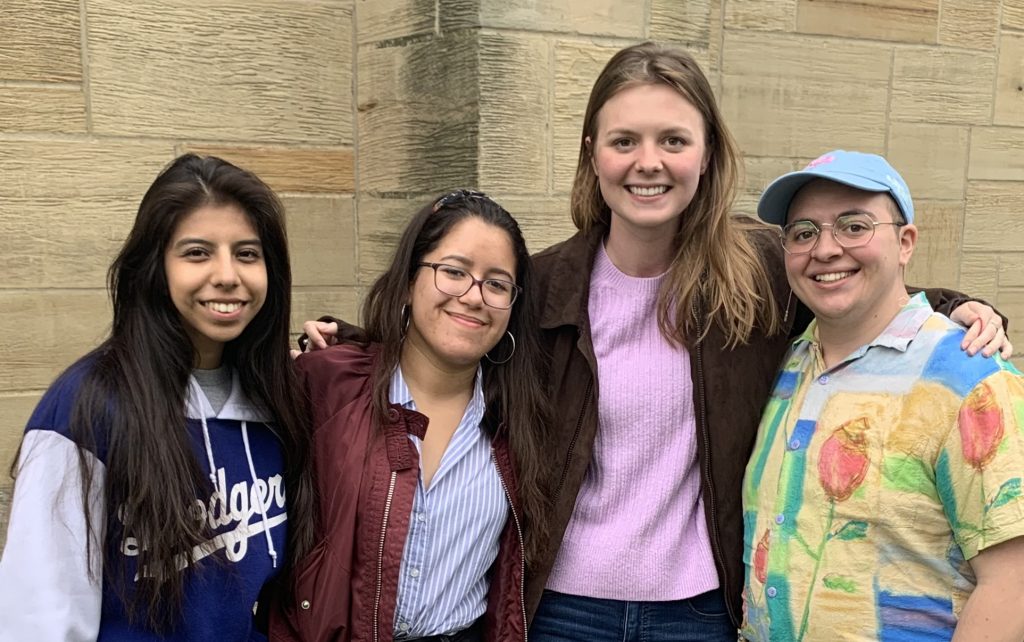
“Working together, we were able to find information on the history, art, and organizations of Chiapas that we otherwise could not have alone. For example, our collective knowledge of English and Spanish meant we could work across the borders of both languages, traversing linguistic boundaries. In this way, we read articles, websites, and books in Spanish and English, wrote mainly in English, and provided translations for the Spanish, which was also sometimes included. Whereas working individually would have only tested our theoretical knowledge, working together allowed us to engage in transnational feminist praxis through collaborative writing. By working together, our group learned about how the women of CDMCH help women assert their autonomy and self-determination in their communities and against oppressive authorities. By working together for a common goal, these women use emotional connection, memory, and personal and collective histories to tell stories of their silenced experiences, thereby producing alternative, decolonized knowledge. The work of the women of Chiapas reminds us all about the importance of voice and storytelling, and of using one’s voice to fight for justice in the community.”
