
SisterSong Women of Color Reproductive Collective (SisterSong) has been fighting for reproductive justice and freedom for women of color within the United States since 1997. This organization was founded by 16 separate Women of Color organizations from differing communities (Native American, African American, Asian American, and Latina) in order to represent and advocate for the reproductive needs of their respective communities. SisterSong describes itself as a Southern-based organization dedicated to building networks of individuals and organizations working collaboratively in order to better the institutional policies and systems that negatively impact the reproductive autonomy of marginalized communities. The intersectionality of SisterSong’s membership follows the transnational feminist methodology, maintaining that the focus of institutional change will result from solidarity in struggle rather than a sisterhood mentality. This approach strengthens and diversifies SisterSong’s opportunity to challenge existing hegemonies that impede the bodily and reproductive independence of women of color.
Main Issues
The mission statement of SisterSong highlights it primary objectives: “…to strengthen and amplify the collective voices of indigenous women and women of color to achieve reproductive justice by eradicating reproductive oppression and securing human rights” (https://www.sistersong.net/). SisterSong defines reproductive justice as “…the human right to maintain personal bodily autonomy, have children, not have children, and parent the children we have in safe and sustainable communities” (https://www.sistersong.net/). This definition of reproductive justice has allowed SisterSong to integrate the notion of reproductive justice as a human right, which enables them as an organization to allow for the recognition of multiple identities while also advocating for legislation that better serves marginalized groups.
Challenges
One of the challenges faced by SisterSong is lack of funding. As a grassroots organization, SisterSong has capitalized on its ability to have complete control and autonomy over its mission and the programs it supports. Hence, SisterSong relies on donations to support its mission and goals. Lack of funding to support such goals is a constant challenge for the organization.
Achievements and Drawbacks
One of the most important achievements of SisterSong is their work towards defining reproductive rights as a universal human right, in order to provide better reproductive care and education to marginalized women. In “From Rights to Justice: Women of Color Changing the Face of US Reproductive Rights Organizing,” Zakiya Luna notes that one of the most important innovations of SisterSong as an organization is their definition of reproductive justice for women of color as a human right in order to further their position and challenge legislation that limits this freedom. SisterSong uses a holistic analysis of institutionalized oppression of this, Luna states,
SisterSong’s network of organizations frames the concern around women’s control of their bodies in terms of needing reproductive justice rather than only reproductive rights. SisterSong explicitly integrates human rights discourse into its literature. Its work represents a shift for women advocating for control of their bodies, from a narrower focus on legal access and individual choice (the focus of mainstream reproductive women’s organizations such as the National Organization for Women), to a broader analysis of structural constraints on agency.
This quote highlights how SisterSong has used a human-rights focus in their fight for reproductive justice to problematize existing legislation (such as Roe v. Wade). This is significant because this legislation frequently does not acknowledge the intersectionality of race, class, and gender identities, and thus results in disproportionately negative outcomes in regards to the reproductive health of women of color. Furthermore, SisterSong definies Reproductive Justice (RJ) as not only a human right, but also access versus choice, and ultimately, as not being specifically about abortion. This is important because it acknowledges that the reproductive lives of women of color are complicated by their racial identities, thus demanding that legislation acknowledge and address these concerns. For example, SisterSong states “Even when abortion is legal, many women of color cannot afford it, or cannot travel hundreds of miles to the nearest clinic. There is no choice where there is no access” (https://www.sistersong.net/). This demonstrates their commitment to a holistic understanding of the needs of communities of color.
In order to achieve reproductive justice, SisterSong’s goals are to:
- Analyze power systems. Reproductive politics in the US is based on gendered, sexualized, and racialized acts of dominance that occur on a daily basis. RJ works to understand and eradicate these nuanced dynamics.
- Address intersecting oppressions. Audre Lorde said, “There is no such thing as a single-issue struggle because we do not live single-issue lives.” Marginalized women face multiple oppressions and we can only win freedom by addressing how they impact one another.
- Center the most marginalized. Our society will not be free until the most vulnerable people are able to access the resources and full human rights to live self-determined lives without fear, discrimination, or retaliation.
- Join together across issues and identities. All oppressions impact our reproductive lives; RJ is simply human rights seen through the lens of the nuanced ways oppression impacts self-determined family creation. The intersectionality of RJ is both an opportunity and a call to come together as one movement with the power to win freedom for all oppressed people.
(https://www.sistersong.net/, 2019)
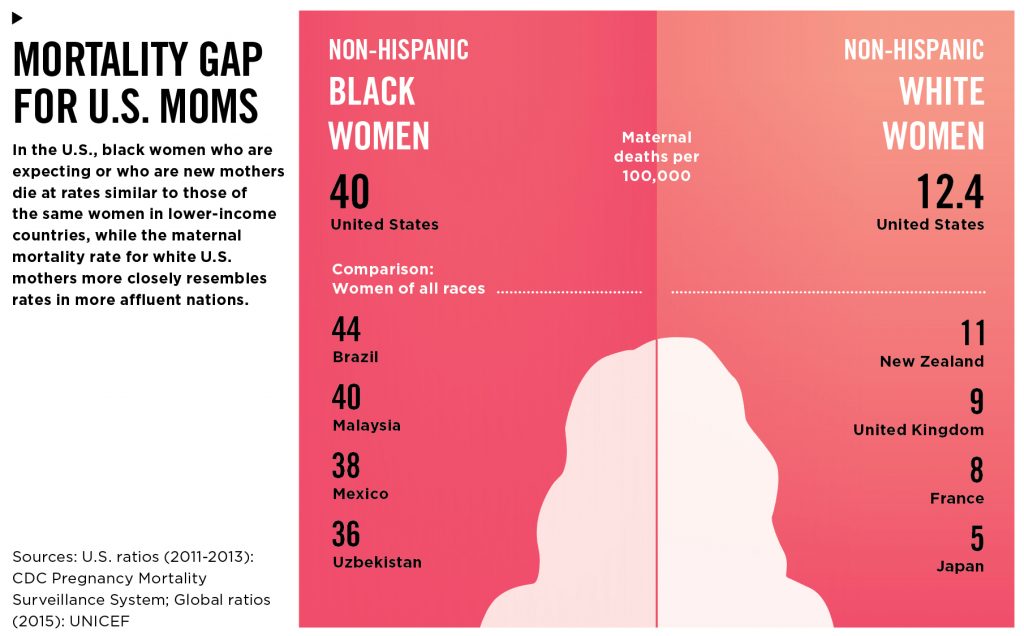
SisterSong currently runs several programs to educate and work with women in their fight for reproductive justice, including a variety of areas, such as: The Arts United for Reproductive Justice Program, founded on the mission that “Art has the power to break down barriers, uncover plugged ears, raise new questions and conversations, inspire compassion, spark activism, and rally multitudes around a cause” (https://www.sistersong.net/); the Black Mamas Matter, a collaboration of “black women’s organizations and individual black women leaders who are raising awareness and recruiting activists and organizations to join us in pushing for policy changes like Medicaid expansion, which can help keep Southern black women safe” (https://www.sistersong.net/); and programs for engaging women of color in Reproductive Justice Training and Leadership Development.
One of the most notable drawbacks SisterSong has faced is a lack of funding for the programs they promote. However, their political and community contributions have far outweighed the challenges they have faced. Through their dedicated commitment to community engaged work, they have been able to truly listen to the community they intend to serve.
Relationship to the State and Culture
One of the most important aspects of SisterSong is their attempt to empower the voices of Women of Color to express, in their own words, what they need and want in the form of reproductive justice. SisterSong is explicitly devoted to authentically represent as many communities as possible, and defines itself as: “[the] largest national multi-ethnic Reproductive Justice collective. Our membership includes and represents Indigenous, African American, Arab and Middle Eastern, Asian and Pacific Islander, and Latina women and LGBTQ people. Membership also includes white, male, and pro-life allies who support women’s human right to lead fully self-determined lives”(https://sistersong.nationbuildercom/donate). SisterSong’s headquarters are located in Atlanta, Georgia, and much of their work represents an understanding of how reproductive rights are severely limited for low-income women of color. In Atlanta, 17.7% of women and 25% of African Americans fall below the poverty line, and the city has the 36th highest teen birth rate in the U.S. (https://talkpoverty.org/state-year-report/georgia-2016-report/). Thus, the location of SisterSong explicitly allows them to serve the populations they aim to benefit.
Relationship to Transnational Organizations
SisterSong embodies a transnational methodology to fight for reproductive justice for women of color. Through their multicultural identity, they demonstrate an intention to uphold solidarity between allies (not sisterhood) to achieve their goals. By listening to the needs of the community through direct engagement and uplifting the voices of women of color, they embody intersectionality, defending “the right and responsibility to represent ourselves and our communities, and the equally compelling need to advance the perspectives and needs of women of color.” The birth of SisterSong indicates their understanding that the current hegemonies of power limit the freedom of reproductive rights afforded to women of color. By relying on transnational feminist methodologies to deconstruct the existing power system that abuses and silences women of color, they show the strategic power of U.S. women of color.
Works Cited:
“Reproductive Justice.” Sister Song, SisterSong Inc, www.sistersong.net/reproductive-justice/.
Luna, Zakiya. “From Rights to Justice: Women of Color Changing the Face of US Reproductive Rights Organizing.” Societies Without Borders, vol. 4, no. 3, Oct. 2009, pp. 343–365.x
