Background on the Organization

In 2013 Dr. Shruti Kapoor founded Sayfty after hearing about the terrifying news of a gang rape in Delhi in order to help empower and educate women and girls about sexual violence in India. Dr. Kapoor is an activist for gender equality, an economist, a social entrepreneur and has a Ph.D. in Economics from the University of California, Riverside. Dr. Kapoor was nominated by the White House for the changemaker award at The United State Women Summit in 2016. Sayfty’s work on education and safety of girls won a state recognition award by the Uttar Pradesh government in India. Sayfty works to make the daily lives of Indian women safer by encouraging and empowering them to take a stand against gender violence (http://sayfty.com/about-our-founder/).
Relationship to other Women’s Organizations
Sayfty is one of many organizations that help equip women in India with the necessary tools to empower themselves. While Sayfty specifically helps prevent acts of sexual violence through education on self-defense, they have partnered with other transnational organizations such as Women Thrive Alliance, to support their advocacy work. Women Thrive Alliance is a global feminist advocacy network with the mission is to make gender equality a reality. It works to mobilize hundreds of women’s rights groups in over 50 countries. Their belief is that gender equality begins with grassroots organizations, such as Sayfty, which focuses on groups that are marginalized by patriarchal structures. The Alliance provides these organizations connections to other gender equality organizations and as well as help support them in order to fulfill their local and global agendas (Learn more about Women Thrive Alliance at http://womenthrive.nationbuilder.com.). Transnational organizations such as Women Thrive Alliance illustrate how a bottom-up approach is beneficial for local and global feminist networks.
Education and Empowerment within Sayfty
Sayfty uses its social media platforms to create safe spaces for open dialogue through educational initiatives. Hashtags such as #SayftyChat, #VoiceoftheWeek, and #ZeroTolerance are some of the dynamic forums they have curated. Sayfty has attracted thousands of voices to challenge popular beliefs, and ultimately, to propose solutions in a respectful and engaging manner. Sayfty “dreams” of a society where gender equality is the norm, and violence against women is eliminated once and for all. Furthermore, Sayfty also has educational campaigns such as “I Feel Unsafe When.” The “I feel Unsafe When” campaign was created by the first Women’s Global Leadership Institute and coordinated by the Center for Women’s Global Leadership in 1991.The campaign received submissions from all over the world on what makes people feel unsafe. The overwhelming amount of submissions indicated the success of the campaign allowing women to share their stories.
Sayfty also empowers girls and women through self-defense workshops. They encourage everyone to share stories about inspirational humans who have “overcome adversity” in their lives. The organization has partnered with reputable trainers in India to lead Safety Workshops. Their most recent campaign focuses on children’s books that empower girls and challenges stereotypes.
Relationship to Transnational Organizations
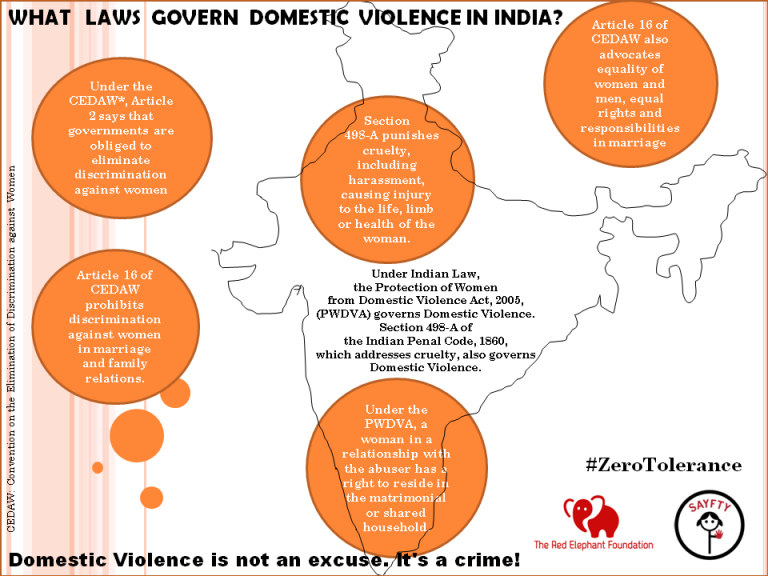
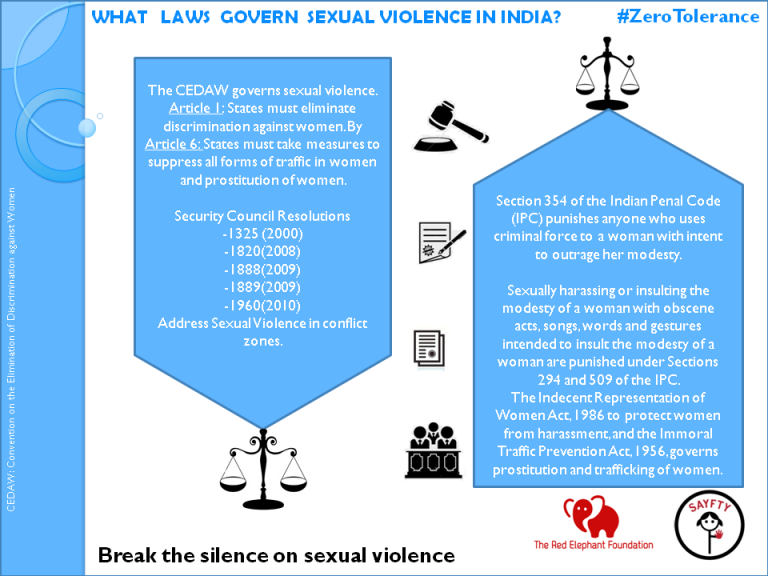
Sayfty uses storytelling as an effective method to spread information about sexual violence in India. The main topics they address are: domestive violence, dowry harrassment, workplace sexual harrassment, rape, marital rape, sexual violence, street harrassment, female feoticide, female genital mutilation, trafficking of women, and acid attacks. Sayfty created four hashtags linked to chat forums where users can tell their stories. The first one is #SayftyChat. This Twitter forum occurs each week for an hour long where women discuss methods to prevent violence against women. The hashtag #VoiceofTheWeek chooses a person to take over Sayfty’s Twitter account to address their thoughts on violence against women. Most participants have come from India or the United States. However, people from Thailand, Sierra Leone, Spain, and England have also participated. #ZeroTolerance collaborates with The Red Elephant Foundation, which also uses storytelling as their way to promote gender equality all over the world. #ZeroTolerance is used to create a series of infographics that focuses on a specific gender inequality issue. These infographics are entirely online in order to share them broadly. The hashtag #IFeelUnsafeWhen was first created in solidarity with the 16 Days of Activism Against Gender-Based Violence campaign launched by the Women’s Global Leadership Institute.
Relationship to the State and the Country’s Culture
Members of Sayfty understand that Indian culture perpetuates gender stereotypes. Girls typically do not have the freedom to voice their opinions on most issues, and are discouraged from challenging norms. Patriarchal norms prevent women from living up to the ideals of respect, and to value femininity. Additionally, women’s safety and gender equality are considered taboo topics that do not receive enough attention. Sayfty works to combat these stereotypes and disempowerment. They believe that the notions held by many in Indian culture now to be outdated and in need of transformation. That is why they work so hard to teach and instill respect for women at an early age, from using social media to challenging state policy. Their goals include ensuring a zero-tolerance policy for violence against women at every level of governance, creating awareness in schools about violence against women and girls, and pushing the legal system to be more effective and efficient for survivors of violence.
Under the Indian Penal Code, assault against women is defined as: “any act by a person that assaults or uses criminal force against a woman with the intention or knowledge that it will outrage her modesty.” This is criminalized and punished with imprisonment up to 2 years, a fine, or both. Indian laws have been revised in recent years after cases of rape and sexual assault have occurred. New anti-rape laws have received mixed reviews.–Indian legislators have tried setting stronger penalties for convicted rapists and making its judicial system more efficient, but there have been concerns that these changes will be difficult to implement and could backfire. The Prime Minister’s new ordinance calls for the fast-tracking of all rape trials (judged within 6 months), which is progressive in theory but possibly too ambitious. Source here needed. Overall, Sayfty has made it clear that there is still a need to keep reforming laws concerning violence against women and that efforts to protect women must not cease.
