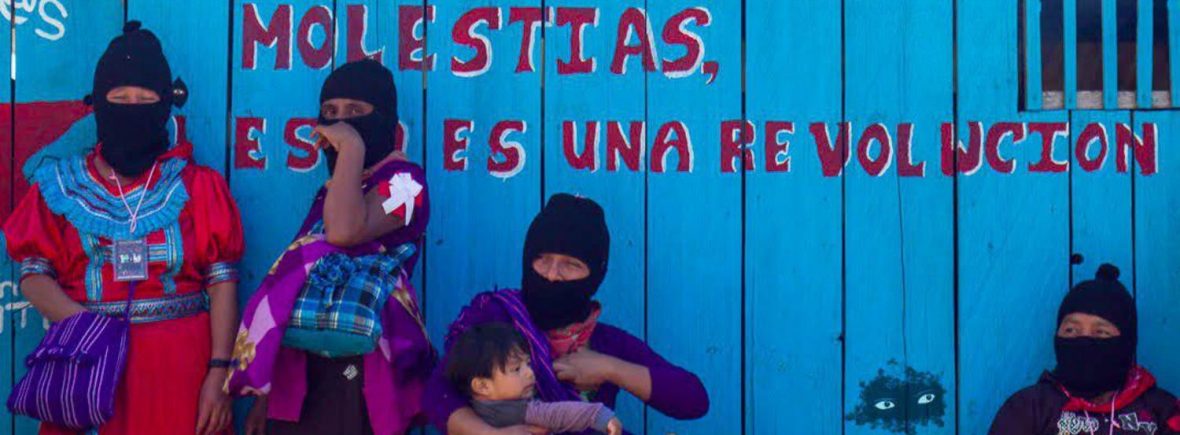
History of Chiapas, Mexico
The territory that is now known as Mexico had large Indigenous civilizations before being colonized by the Spaniards during the 16th century. Chiapas, the southernmost state, has one of the largest Indigenous populations in Mexico, with almost a quarter of the population speaking a Mayan dialect or other related Indigenous language. Mayan culture has been present in the area for about 1500 years, though evidence of human activity has been traced back to unknown groups in 1400 BCE. Ancient Mayans are known as skilled weavers, mathematicians, calendar and pottery makers, as well as temple and pyramid builders. Much of their architecture remains today, some with murals on the walls.
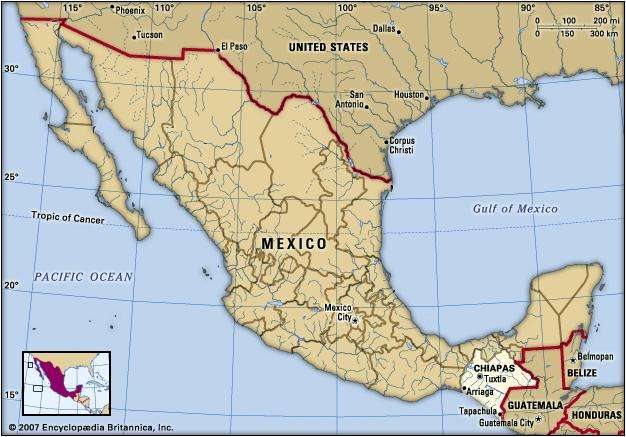
In 1522, Hernán Cortés sent tax collectors to the area that is now known as Chiapas, shortly after “conquering” the Aztec Empire in 1519. Afterward, Cortés assigned Luis Marín as his emissary to Chiapas to colonize Indigenous Tzotzil people. In order to do so, he sent reinforcements to help control the native people, “many of whom chose suicide over being conquered.” Mexico has a long and turbulent history of uprisings and revolutions among Indigenous and lower class groups. It is said that formal conflict between the natives and Marín ended in 1528, and by the late 16th century, more than half of the Indigenous population in the area had been killed by Spanish colonizers. After Marín, the native people continued to resist Spanish rule into the 17th century.
Chiapas declared their independence from Spain in 1821 and joined the Mexican alliance in 1824. Shortly after, Chiapas drafted a constitution and were officially incorporated into Mexico in 1841. Unlike the rest of Mexico, Chiapas was not impacted much by the Mexican Revolution at the start of the 20th century. For many decades, Chiapas lacked adequate infrastructure and was often neglected by the Mexican government. As a result, there were widening gaps in education and income compared to the rest of the country.
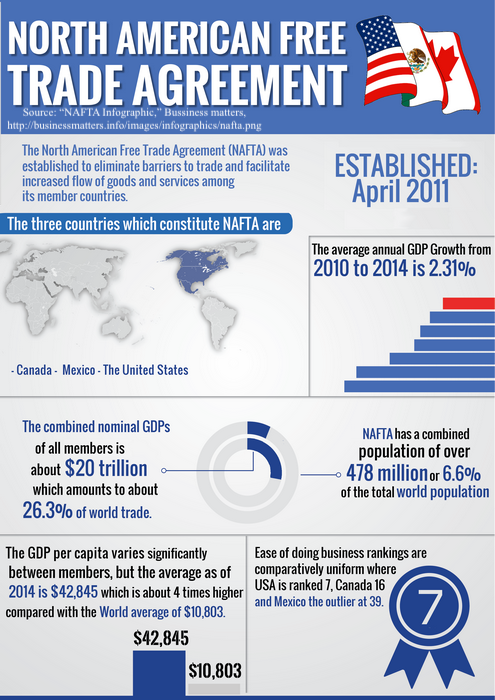
In addition, the 1994 North American Free Trade Agreement (NAFTA) was particularly damaging to agricultural economies and the Indigenous population in Chiapas. While areas with high manufacturing experienced economic growth following NAFTA, rural and agricultural regions were pushed out of the market by the large agro-industry in the United States. U.S. corn subsidies particularly affected Mayan communities in the area, for whom maize is a staple crop and symbolic icon. In all, NAFTA destroyed the livelihoods of many small farmers living in Chiapas and other areas, with 4.9 million being displaced from 1991-2007. As Mexico’s overall agricultural economy has declined 40% since its implementation, farmers have referred to NAFTA as their “death certificate.” Women and children disproportionately bear the brunt of this land dispossession.
Emiliano Zapata formed the Zapatista Army of National Liberation, known as the Ejército Zapatista de Liberación Nacional or EZLN as an armed resistance, “because we saw how widespread had become the evil wrought by the powerful who only humiliated us, stole from us, imprisoned us and killed us, and no one was saying anything or doing anything.” They demanded “democracy, liberty and justice for all Mexicans,” particularly for Indigenous people.
Unlike other social movements in Latin America, the EZLN has incorporated women’s issues into its platform from its inception. This is perhaps due in part to the makeup of EZLN’s members, a third of which are women” (Kampwirth 85). The movement was hugely influential in the organization of Mexican women, particularly Indigenous women of southern Mexico. In 1993, EZLN passed the Revolutionary Law of Women, known as la Ley Revolucionaria de Mujeres. The law, made up of ten points, asserted the autonomy of women in all aspects of their lives. It declares the rights of women to work and earn fair pay, to choose how many children to have, the right to education, the right to safety, and more. The law is foundational to the movement. However, many Indigenous women have struggled for their rights within the movement itself. While EZLN fights the state for rights and autonomy, Indigenous women in the EZLN also struggle within their communities. Regardless, Indigenous Zapatista women have increased their participation in Indigenous government, such as the Indigenous National Congress, and face challenges in resisting the political discourse of “the idyllic vision of indigenous cultures,” which exists among Indigenous leadership. The women of EZLN fight not only for the right to their culture (including recognition from state leadership) but also for the right to resist and change traditions which undermine their human rights. “Their struggle is not one for the recognition of an essentialized culture but for the right to reconstruct, confront, and reproduce that culture, not on terms established by the state but on terms established by the indigenous peoples themselves in the context of their own internal plurality” (Hernández Castillo, 66-67).
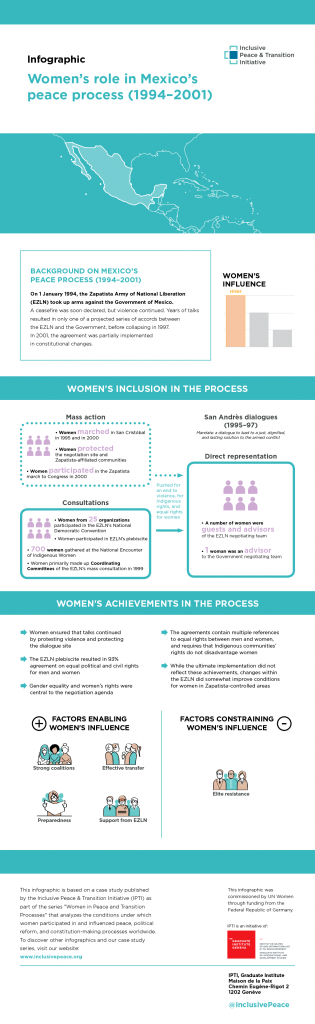
In 2005, the Zapatistas published the Sixth Declaration of the Selva Lacandona (the Sixth Declaration of the Lacandon Jungle). The declaration is an updated manifesto “which seeks to touch the hearts of humble and simple people like ourselves, but people who are also, like ourselves, dignified and rebel.” In it, they “invite other persons to walk with us in something very great which is called Mexico and something greater which is called the world.” EZLN still has an active website, with an invitation from the women of EZLN to “las mujeres que luchan en todo el mundo” (to the women who fight all over the world). As “adherents to the Sixth Declaration of the Lacandon Jungle,” El Centro de Derechos de la Mujer de Chiapas “are against the neoliberal capitalist and patriarchal system that now exists in […] Indigenous communities […] throughout the country.”
